Faculty of Engineering & Technology
Department of Electronics Engineering
The Department of Electronics Engineering empowers students with the knowledge and skills needed to innovate in a rapidly evolving technological world, blending academic excellence with hands-on experience and industry-relevant learning.

Vision
Our vision is to promote quality higher education and research culture so that highly efficient and market job-oriented graduates are produced who could serve the nation with zeal and zest.
Mission
To produce quality professional electronics engineers with sound knowledge-base and technical skill set along with high moral values that empower them to meet the requirements of innovative research, modern industry and sustainable development.
Programme Educational Outcomes (PEO's)
PEO-01
Be innovative and skilled engineers capable to solve engineering problems.
PEO-02
Exhibit strong moral values and demonstrate respect towards society.
PEO-03
Manage their individual and team tasks effectively.
Mapping of PEO's with Vision and Mission of Institution
Table shows Mapping of PEO's with Vision and Mission.
| S.No | PEO’s | Vision | Mission Statement |
|---|---|---|---|
| 1. | Be innovative and skilled engineers capable to solve engineering problems. | ✔ | ✔ |
| 2. | Exhibit strong moral values and demonstrate respect towards society. | ✔ | ✔ |
| 3. | Manage their individual and team tasks effectively. | ✔ | ✔ |
Mapping of PLOs and PEOs
The mapping of PLOs to PEOs is presented as:
| Sr. No. | Program Learning Outcomes (PLOs) | Program Educational Objectives (PEOs) | ||
|---|---|---|---|---|
| PEO-1 | PEO-2 | PEO-3 | ||
| 1 | Engineering Knowledge | ✔ | ||
| 2 | Problem Analysis | ✔ | ||
| 3 | Design/Development of Solutions | ✔ | ||
| 4 | Investigation | ✔ | ||
| 5 | Modern Tool Usage | ✔ | ||
| 6 | The Engineer and Society | ✔ | ||
| 7 | Environment and Sustainability | ✔ | ||
| 8 | Ethics | ✔ | ||
| 9 | Individual and Team Work | ✔ | ||
| 10 | Communication | ✔ | ||
| 11 | Project Management | ✔ | ||
| 12 | Lifelong Learning | ✔ | ||
IAB Committee
According to the manual of accreditation 2019 vid clause no. 2.5.7, the industrial advisory board (IAB) is a mandatory committee for the implementation of outcome-based education (OBE) in engineering programmes. All faculty members of the Electronics Engineering Department, except for the convener/chairperson, are appointed as co-opted members of the IAB.
| Sr. No | Name | Designation | Institute/University | Role |
|---|---|---|---|---|
| 1. | Engr. Dr. Mohsin Mumtaz Tarar | Assistant Professor (HoD) | University of Chakwal | Convener |
| 2. | Haroon Noman | Manager R&D SW | Motorola | Member |
| 3. | Inamullah Khan | Manager Implementation | Hitech Network Pvt Ltd | Member |
| 4. | Waheeb Butt | 5G Systems Verification Engineer | Nokia, Germany | Member |
| 5. | Muhamamd Nafees | Team Lead Application Security | TABADUL | Member |
| 6. | Omer Majeed | CEO/Founder | Decapod Labs Pakistan, Founder | Member |
| 7. | Muhamamd Bin Zaheer | Director Digital Growth | Systems Limited | Member |
Programme Learning Outcomes (PLO's)
Adoption of PLOs
The Department of Electronics Engineering has adopted the Programme Learning Outcomes defined by Pakistan Engineering Council (PEC) and are supported by our defined PEOs. These PLOs are related to aptitude, awareness, and performance. Students will acquire these skills with the progression of the program.
PLO-01: Engineering Knowledge
An ability to apply knowledge of mathematics, science, engineering fundamentals and an engineering specialization to the solution of complex engineering problems.
PLO-02: Problem Analysis
An ability to identify, formulate, research literature, and analyse complex engineering problems reaching substantiated conclusions using first principles of mathematics, natural sciences, and engineering sciences.
PLO-03: Design/Development of Solutions
An ability to design solutions for complex engineering problems and design systems, components or processes that meet specified needs with appropriate consideration for public health and safety, cultural, societal, and environmental considerations.
PLO-04: Investigation
An ability to investigate complex engineering problems in a methodical way including literature survey, design and conduct of experiments, analysis and interpretation of experimental data, and synthesis of information to derive valid conclusions.
PLO-05: Modern Tool Usage
An ability to create, select and apply appropriate techniques, resources, and modern engineering and IT tools, including prediction and modelling, to complex engineering activities, with an understanding of the limitations.
PLO-06: The Engineer and Society
An ability to apply reasoning informed by contextual knowledge to assess societal, health, safety, legal and cultural issues and the consequent responsibilities relevant to professional engineering practice and solution to complex engineering problems.
PLO-07: Environment and Sustainability
An ability to understand the impact of professional engineering solutions in societal and environmental contexts and demonstrate knowledge of and need for sustainable development.
PLO-08: Ethics
Apply ethical principles and commit to professional ethics and responsibilities and norms of engineering practice.
PLO-09: Individual and Teamwork
An ability to work effectively, as an individual or in a team, on multifaceted and /or multidisciplinary settings.
PLO-10: Communication
An ability to communicate effectively, orally as well as in writing, on complex engineering activities with the engineering community and with society at large, such as being able to comprehend and write effective reports and design documentation, make effective presentations, and give and receive clear instructions.
PLO-11: Project Management
An ability to demonstrate management skills and apply engineering principles to one's own work, as a member and/or leader in a team, to manage projects in a multidisciplinary environment.
PLO-12: Lifelong Learning
An ability to recognize importance of and pursue lifelong learning in the broader context of innovation and technological developments.
Lab Facilities
| S.No | Lab Name |
|---|---|
| 1. | Electronics Lab |
| 2. | Communication Systems Lab |
| 3. | Computer Lab |
| 4. | Circuits and Instrumentation Lab |
| 5. | ASIC & DSP Lab |
| 6. | Embedded Systems Lab |
| 7. | Machine Lab |
Faculties
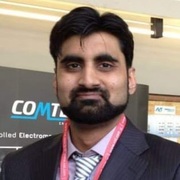
Engr. Dr. Mohsin Mumtaz Tarar
HOD ECT / Assistant Professor
Phd Electrical Engineering (RWTH Aachen University, Germany)MS Electrical Engineering with Specialization in Communication and Electronics (Linkoping University, Sweden)
Research Interest
Wideband/broadband Integrated Circuit design in CMOS, BiCMOS Technologies
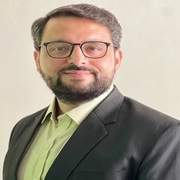
Engr. Dr. Asim Quddus Satti
Program Coordinator / Assistant Professor
PhD Electrical Engineering (UET, Taxila)MS Electrical Engineering (UET, Taxila)
Research Interest
Microwave Antennas
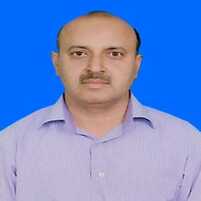
Dr. Tariq Mehmood
Assistant Professor
PhD Mathematics (Quaid-i-Azam University Islamabad)MSc Mathematics (Punjab University Lahore)
Research Interest
Advanced Mathematics and Modeling

Engr. Syed Muhammad Qasim Ali Shah
Lecturer
MS Electrical Engineering (NUST, Islamabad)BSc Electronics Engineering (The Islamia University of Bahawalpur)
Research Interest
Metamaterials, Frequency Selective Surface and Antennas
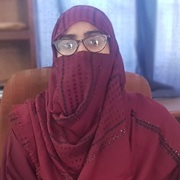
Engr. Safia Bibi
Lecturer
MS Electrical Engineering (UET Taxila)BSc Electronics Engineering (UET Taxila)
Research Interest
Digital Electronics
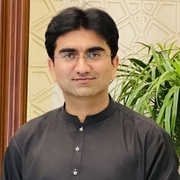
Engr. Athar Baig
Lecturer
MS in Electrical Engineering with specialization in Electronics and Communication (UET Lahore)BSc Electrical (Electronics) Engineering (The Islamia University of Bahawalpur)
Research Interest
MEMS based Energy Storage Devices
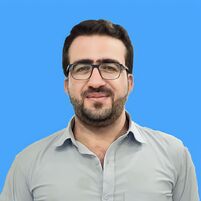
Engr. Illahi Jan Shah
Lecturer
MS Electrical Engineering with Specialization in Advanced Electronics (International Islamic University, Islamabad)BS Electronics Engineering (International Islamic University, Islamabad)
Research Interest
Advanced Electronics (micro & nano electronics), device fabrication and characterization, Memristors for Neuromophic Computing

Engr.Aneeqa Fakhar
Lab Engineer
MS Engineering Management (UET, Taxila)BS Electronics Engineering (UET, Taxila)
Research Interest
Wireless Communication & Project Management
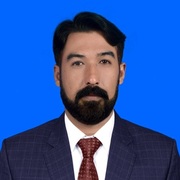
Engr. Muhammad Qamar Ud Din
Lab Engineer
MS Electrical Engineering (University of Lahore, Lahore)BS Electronics Engineering (COMSATS, Abbottabad)
Research Interest
Power Electronics
Course Curriculum For Session 2023 To Onward
| 1st Semester | |||
|---|---|---|---|
| Course Code | Course Title | Credit Hours | |
| Th. | Pr. | ||
| BH-111 | Functional English | 3 | 0 |
| BH-112 | Calculus & Analytical Geometry | 3 | 0 |
| BH-113 | Applied Physics | 3 | 1 |
| CS-114 | Computer Fundamentals & Programming | 2 | 1 |
| EN-115 | Linear Circuit Analysis | 3 | 1 |
| EN-116 | Electronics Workbench | 0 | 1 |
| Total | 14 | 4 | |
| Semester Total | 18 | ||
| 2nd Semester | |||
|---|---|---|---|
| Course Code | Course Title | Credit Hours | |
| Th. | Pr. | ||
| BH-121 | Communication Skills | 3 | 0 |
| BH-122 | Linear Algebra | 3 | 0 |
| CS-123 | Computer Aided Engineering Design | 0 | 1 |
| CS-124 | Object Oriented Programming | 3 | 1 |
| EN-125 | Solid State Electronics | 2 | 0 |
| EN-126 | Electronic Devices & Circuits | 3 | 1 |
| Total | 14 | 3 | |
| Semester Total | 17 | ||
| 3rd Semester | |||
|---|---|---|---|
| Course Code | Course Title | Credit Hours | |
| Th. | Pr. | ||
| BH-211 | Differential Equations | 3 | 0 |
| BH-212 | Pakistan Studies | 2 | 0 |
| EN-213 | Digital Logic Design | 3 | 1 |
| EN-214 | Electronics Circuit Design | 3 | 1 |
| BH-215 | Technical Report Writing | 3 | 0 |
| Total | 14 | 2 | |
| Semester Total | 16 | ||
| 4th Semester | |||
|---|---|---|---|
| Course Code | Course Title | Credit Hours | |
| Th. | Pr. | ||
| BH-221 | Complex Variables & Transforms | 3 | 0 |
| EN-222 | Electrical Network Analysis | 3 | 1 |
| EN-223 | Microprocessors & Microcontrollers | 3 | 1 |
| EN-224 | Islamic Studies | 2 | 0 |
| EN-225 | Integrated Electronics | 3 | 1 |
| Total | 14 | 3 | |
| Semester Total | 17 | ||
| 5th Semester | |||
|---|---|---|---|
| Course Code | Course Title | Credit Hours | |
| Th. | Pr. | ||
| EN-311 | Electrical Machines | 3 | 1 |
| EN-312 | Instrumentation & Measurements | 3 | 1 |
| EN-313 | Probability & Random Variables | 3 | 0 |
| EN-314 | Electromagnetic Field Theory | 3 | 0 |
| EN-315 | Signals & Systems | 3 | 1 |
| Total | 15 | 3 | |
| Semester Total | 18 | ||
| 6th Semester | |||
|---|---|---|---|
| Course Code | Course Title | Credit Hours | |
| Th. | Pr. | ||
| BH-321 | Social Sciences Elective-I | 3 | 0 |
| MS-322 | Management Science-I | 3 | 0 |
| EN-323 | Analog & Digital Communication | 3 | 1 |
| EN-324 | Control Systems | 3 | 1 |
| MS-325 | Digital Signal Processing | 3 | 1 |
| Total | 15 | 3 | |
| Semester Total | 18 | ||
| 7th Semester | |||
|---|---|---|---|
| Course Code | Course Title | Credit Hours | |
| Th. | Pr. | ||
| BH-411 | Social Sciences-II | 3 | 0 |
| EN-4XX | Elective-I | 3 | 1 |
| EN-4XX | Elective-II | 3 | 0/1 |
| XX-4XX | Elective-III | 3 | 0/1 |
| EN-499A | Electronic Engineering Project | 0 | 3 |
| Total | 12 | 4/6 | |
| Semester Total | 16/18 | ||
| 8th Semester | |||
|---|---|---|---|
| Course Code | Course Title | Credit Hours | |
| Th. | Pr. | ||
| MS-421 | Management Science Elective-II | 3 | 0 |
| EN-4XX | Elective-III | 3 | 1 |
| EN-4XX | Elective-IV | 3 | 0/1 |
| EN-499B | Electronic Engineering Project | 0 | 3 |
| Total | 9 | 4/5 | |
| Semester Total | 13/14 | ||
| Total Credit Hours in 4 Years | 133/136 | ||
List of Engineering Elective Courses
| Course Title | Th. | Lab |
|---|---|---|
| FPGA Based System Design | 3 | 1 |
| Embedded System Design | 3 | 1 |
| Industrial Automations | 3 | 1 |
| Power Electronics | 3 | 1 |
| Digital Image Processing | 3 | 1 |
| Microelectronics Technology | 3 | 0 |
| Digital System Design | 3 | 1 |
| Optoelectronic Devices | 3 | 0 |
| IC Testing & Verification | 3 | 0 |
| Industrial Electronics | 3 | 1 |
| Microwave Electronics | 3 | 0 |
| Computer Architecture | 3 | 0 |
| Artificial Intelligence | 3 | 1 |
| Introduction to Nanotechnology | 3 | 0 |
| Wireless Communication | 3 | 0 |
| Telecommunication & Networks | 3 | 0 |
| Biomedical Instrumentation | 3 | 1 |
| Wave Propagation & Antenna Theory | 3 | 1 |
| Introduction to Neural Networks | 3 | 0 |
| Fuzzy Logic | 3 | 0 |
| Introduction to Robotics | 3 | 0 |
| Laser & Fiber Optics | 3 | 0 |
List of Social Sciences Elective Courses
| Course Title | Th. | Lab |
|---|---|---|
| Professional & Social Ethics | 3 | 0 |
| Critical Thinking | 3 | 0 |
| Introduction to Sociology | 3 | 0 |
| Applied Psychology | 3 | 0 |
| Social Anthropology | 3 | 0 |
| Understanding psychology & Human Behavior | 3 | 0 |
| Introduction to Philosophy | 3 | 0 |
List of Management Sciences Elective Courses
| Course Title | Th. | Lab |
|---|---|---|
| Engineering Economics & Management | 3 | 0 |
| Entrepreneurship | 3 | 0 |
| Principals of Management | 3 | 0 |
| Engineering Project Management | 3 | 0 |
| Research Methodologies | 3 | 0 |
| Leadership & Personal Grooming | 3 | 0 |
